🧠
40nm Premium RSX Swap / Replacement
Our preferred Frankenstein RSX: factory bare-die 40nm silicon from select Super Slim MSX/MPX donors with a completely renewed die-level thermal interface.
View service details → iKon Technical SolutionsPS3 Hardware Restoration
PS3 Frankenstein Repair Service
Required PS3 Frankenstein RSX hardware conversion. Control-signal resistor modification and RSX VDDR regulator configuration for 65nm and 40nm replacement GPUs. Separate from optional VDDC core undervolting.
This is physical electronics repair only. This service does not include custom firmware, jailbreaks, modchips, copied games, downloaded games, piracy tools, firmware or system software modification, copyright bypassing, or instructions for accessing paid content.
Service Overview
The RSX Voltage / Resistor Mod is a required hardware conversion performed when installing a later 65nm or 40nm RSX into an early FAT PlayStation 3 motherboard.
This is not the same thing as CELL/RSX undervolting.
The distinction is important because the two services modify different parts of the console's electrical system for completely different reasons.
The Frankenstein voltage/resistor conversion adapts the early motherboard to the electrical and control requirements of the later RSX generation being installed. Our separate undervolting service comes afterward and intentionally reduces the CELL and RSX core voltage, or VDDC/Vcore, to reduce power consumption and heat.
A properly configured Frankenstein system can involve three different electrical changes:
Only the third item is what we call undervolting.
The voltage portion of this service primarily concerns the RSX_VDDR rail.
Early backwards-compatible FAT motherboards were configured around the original 90nm RSX and an approximately 1.2V VDDR supply. Later 65nm and 40nm Frankenstein processors require a different VDDR configuration for a proper long-term retrofit.
Our typical Frankenstein VDDR targets are approximately:
| RSX Generation | VDDR Configuration | Application |
|---|---|---|
| 90nm RSX | Approximately 1.20V | Original FAT motherboard configuration |
| 65nm RSX | Approximately 1.00-1.02V | Required 65nm Frankenstein configuration |
| 40nm RSX | Approximately 0.95V | Required 40nm Frankenstein configuration |
This VDDR change is part of correctly adapting the motherboard to the replacement processor. It is not an optional performance tweak.
The RSX contains several separate electrical domains. These rails serve different parts of the GPU package and should not be treated as though the RSX simply receives one universal voltage.
Important RSX power domains include:
A Frankenstein conversion therefore cannot be accurately described by saying that we simply "change the RSX voltage." The RSX has multiple voltage domains, and the specific rail being modified matters.
This is one of the biggest misconceptions surrounding Frankenstein conversions.
The required 65nm or 40nm VDDR modification does not mean we have performed our optional RSX core undervolt.
VDDR and VDDC are separate electrical domains.
Required Frankenstein VDDR configuration:
Optional RSX undervolting:
One makes the later RSX electrically correct for the retrofit. The other optimizes how much core voltage that processor actually needs.
On supported early FAT motherboard revisions, the proper conversion uses the RSX VDDR regulator circuit rather than simply adding an uncontrolled voltage source.
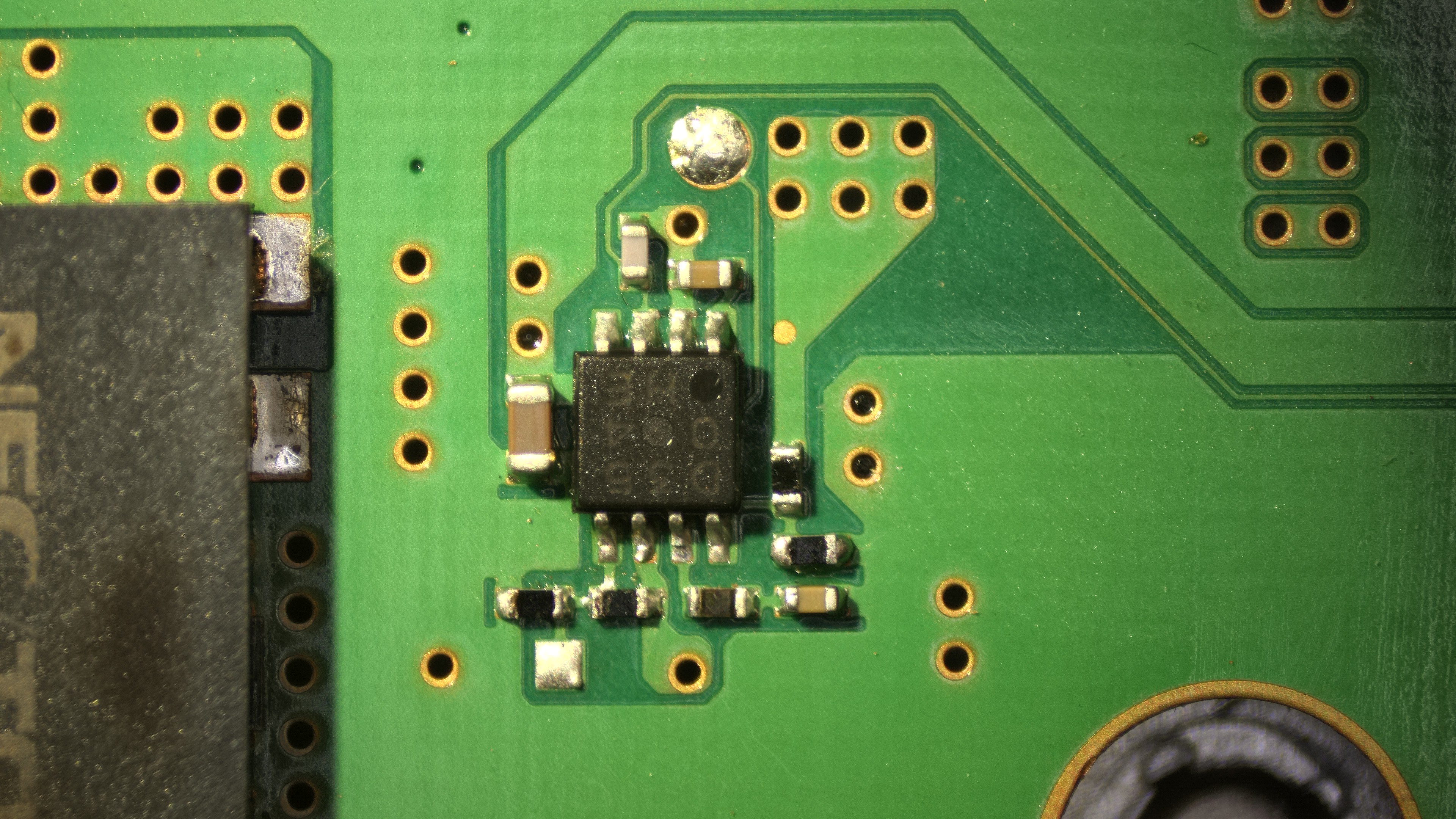
The established Sony-style method replaces the original BD3520 controller configuration with a BD3504 regulator-control configuration and an appropriate resistor network. This allows the VDDR output to be established at the required level while retaining the intended regulator-control architecture.
Different resistor values are used depending on the installed RSX generation.
The objective is approximately:
We verify the resulting rail electrically rather than assuming that installing the correct resistor values automatically guarantees the correct output.
The "resistor" portion of the Frankenstein conversion should also not be confused with undervolting.
Early COK-series motherboards contain RSX reset, clock and configuration circuitry designed around the original 90nm processor. Later RSX generations require changes to several of these signal paths.
On COK-001/COK-002 Frankenstein conversions, this includes modifications around the R2054 / R2153 reset circuitry and, where applicable, the R2001 / R2002 clock-input network.
These changes alter how specific control inputs are presented to the replacement RSX.
They are signal/configuration modifications - not processor undervolting.
It does not lower the entire RSX_VDDIO rail.
One of the COK-001 resistor changes removes the original connection between the approximately 1.5V RSX_VDDIO source and the RSX clock-input network. Because of this, a schematic or meter inspection can make the modification appear related to VDDIO.
However, the objective is changing the electrical state of that particular RSX control/input path. We are not converting the entire RSX_VDDIO supply from one operating voltage to another.
The distinction matters:
The Frankenstein resistor modification is the second case.
No. VDDA is not the primary target of our required Frankenstein voltage/resistor conversion.
VDDA is a separate analog supply domain within the RSX electrical architecture. It is monitored during diagnostic work when appropriate, but it should not be confused with the VDDR regulator modification or the optional VDDC core undervolt.
A later RSX cannot simply be physically soldered onto an early motherboard and expected to initialize normally.
The original SYSCON configuration expects the processor generation originally installed at the factory. When a 65nm or 40nm processor replaces the 90nm RSX, the console must also be configured to recognize and correctly initialize the later processor revision.
This is separate from both VDDR configuration and optional undervolting.
A complete Frankenstein conversion therefore requires the hardware and system configuration to agree:
A later RSX may appear to function even when portions of the electrical conversion are incomplete or incorrectly configured.
Booting is not our definition of a properly completed Frankenstein conversion.
The purpose of installing a 65nm or 40nm RSX is to improve the long-term configuration of the console. Leaving a later processor operating with an inappropriate supply configuration defeats that objective.
For that reason, the required RSX hardware configuration is part of our warranty-supported Frankenstein process.
The easiest way to remember the difference is:
$75 Voltage / Resistor Mod = make the motherboard electrically correct for the replacement RSX.
$60 CELL/RSX Undervolting = optimize VDDC/Vcore after the console has already been correctly converted.
A Frankenstein console can therefore receive both services without duplication because they are modifying different electrical functions.
Installing a newer RSX is only half of a Frankenstein conversion.
The motherboard must also be electrically configured around the processor that is now installed.
That means adapting the appropriate RSX control signals, providing the correct VDDR configuration, programming the system to initialize the replacement processor and verifying the finished electrical behavior.
This service makes the later RSX belong on the motherboard. Undervolting is what we do afterward to make the completed system run even more efficiently.
Premium Packages Customized to your budget.
Related Service Options
Most premium restorations combine multiple hardware services depending
on the condition of the console.